Logic and Velocity: Deductive Challenges Reshaping Multiplayer Racing in Browser Environments
Written by Harper Krüger · Sep 24, 2026

Logic and Velocity: Deductive Challenges Reshaping Multiplayer Racing in Browser Environments
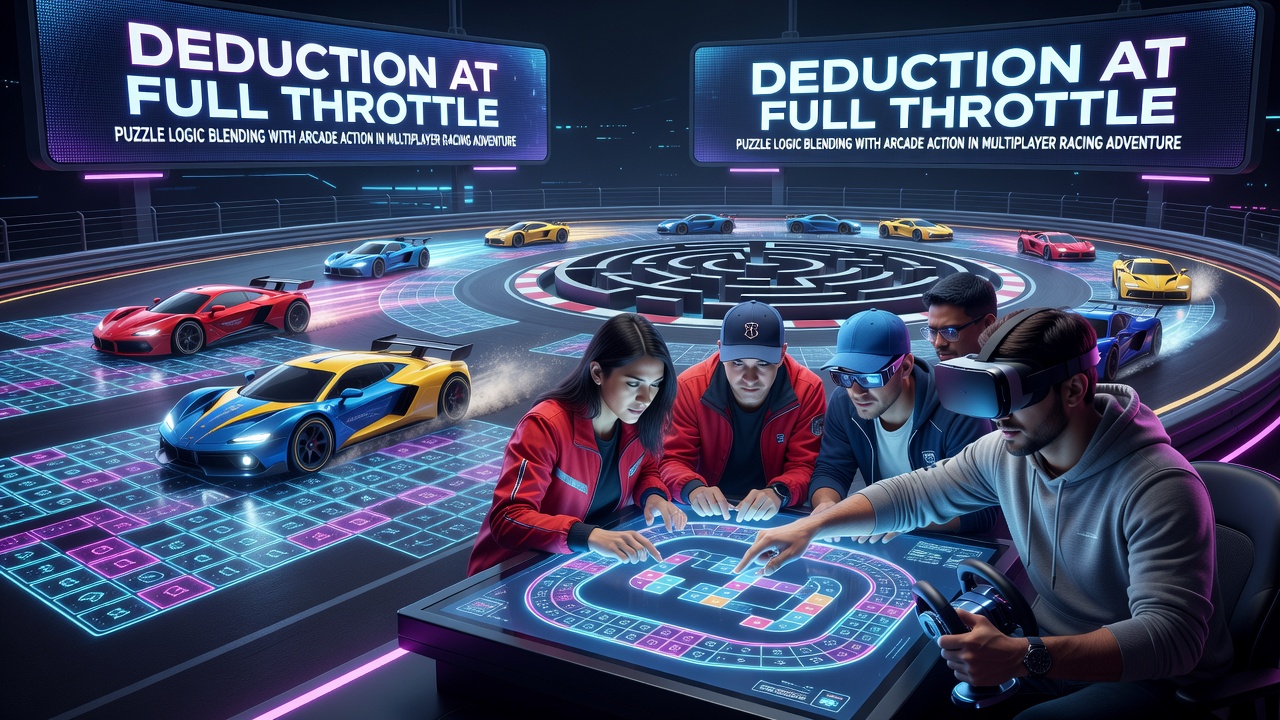
Browser-based racing titles have incorporated deductive reasoning tasks alongside high-speed navigation, where players analyze track patterns and solve embedded logic sequences while maintaining competitive positioning against others in real time. These mechanics draw from established puzzle traditions yet adapt them to arcade pacing, creating sessions that alternate between reflex bursts and calculated pauses at junctions or checkpoints.
Developers integrate elements such as color-coded gate sequences or symbol-matching requirements that must be resolved before acceleration resumes, and data from industry trackers shows participation rates rising steadily through 2025 into 2026. In September 2026 several major browser platforms deployed engine updates that reduced latency during simultaneous puzzle and movement inputs, allowing larger groups to engage without synchronization drops.
Core Mechanics in Current Releases
Racing frameworks supply continuous velocity and collision avoidance while layered puzzle components demand pattern recognition or conditional decision trees that affect route availability or temporary boosts. One common structure requires participants to decode a short sequence of directional cues presented on shared screens before the pack reaches a fork, turning individual deduction into a group coordination point that rewards synchronized choices over isolated speed.
Arcade-style power-ups often tie directly into these logic gates, granting temporary advantages only after correct resolution, whereas incorrect attempts impose brief slowdowns that propagate through the field. Observers note that such systems preserve the immediacy of classic racing loops even as they insert brief analytical windows, and external testing by the International Game Developers Association has documented retention improvements when these hybrid loops repeat across multiple laps.
Multiplayer Dynamics and Synchronization
Group play introduces additional variables because puzzle solutions can be shared or contested among teammates and rivals, leading to emergent strategies where one player sacrifices position to broadcast a clue that benefits the collective. Timing windows tighten as speeds increase, so successful teams develop shorthand communication within the game interface rather than external voice channels, keeping everything contained in the browser session.
Research conducted at the University of Waterloo examined session logs from similar hybrid titles and found that average puzzle resolution times dropped by 18 percent after three consecutive matches, indicating rapid adaptation among recurring player groups. These findings align with broader platform metrics that track input accuracy across reflex and logic phases separately, revealing that precision in deduction phases correlates with overall race completion rates more strongly than raw lap times alone.
Technical Implementation Across Browsers
HTML5 canvas rendering combined with WebSocket connections supports the simultaneous display of moving vehicles and static or animated puzzle overlays without requiring additional plugins. Developers optimize asset loading so that logic elements stream in parallel with track geometry, minimizing interruptions when new deductive challenges appear mid-race. Memory management techniques keep frame rates stable even when multiple participants trigger overlapping puzzle instances, and server-side validation ensures that solutions cannot be bypassed through client-side tampering.
Regional differences appear in implementation choices, with European titles often emphasizing cooperative deduction modes while North American releases lean toward competitive sabotage mechanics that invert correct answers into obstacles for opponents. Australian and Asian markets have tested hybrid variants that incorporate region-specific iconography into the puzzle layers, expanding visual variety without altering core timing structures.
Player Adaptation Patterns
Longitudinal data collected by trade organizations indicate that newcomers initially prioritize speed and only gradually allocate attention to the deductive layers, yet after roughly ten sessions the split between reflex and analysis time stabilizes near a 60-40 ratio. Veterans demonstrate tighter integration, executing logic steps during brief straightaways or drafting opportunities so that momentum rarely breaks. These patterns hold across both casual drop-in lobbies and scheduled tournament brackets.
Conclusion
Browser multiplayer racing continues to absorb deductive components that once belonged exclusively to slower puzzle genres, producing experiences where velocity and reasoning operate on the same clock. Platform updates scheduled through late 2026 are expected to refine input handling further, supporting even denser layering of logic within continuous action sequences while preserving accessibility for short play windows.