Browser Limits Fueling Fresh Crossovers: How Strategy Layers Absorb Arcade Reflexes Within Adventure Multiplayer Setups
Written by Iris Baumann · Sep 10, 2026

Browser Limits Fueling Fresh Crossovers: How Strategy Layers Absorb Arcade Reflexes Within Adventure Multiplayer Setups
Browser performance constraints have prompted developers to blend strategy elements with arcade reflexes inside adventure multiplayer frameworks, creating hybrid experiences that run efficiently across standard web technologies without requiring downloads or plugins. Research from industry reports indicates these fusions emerged as responses to hardware variability and network latency limits common in browser environments, where real-time processing demands must balance with accessible play sessions.
Technical Pressures Shaping Genre Integration
Platform restrictions on memory allocation and rendering pipelines force creators to embed strategic decision trees within fast-paced arcade segments of adventure titles, allowing players to manage resources and plan moves while executing quick reflexes. Data from the Entertainment Software Association shows browser gaming participation grew steadily through 2025, with multiplayer setups accounting for a significant share of sessions that rely on JavaScript and WebGL for synchronization. Observers note how these limits encourage designers to layer turn-based strategy mechanics over continuous action loops, reducing the need for high-frame-rate consistency that often strains older browsers or mobile connections.
And yet the integration goes further when adventure narratives provide context for these hybrids, turning exploration sequences into opportunities for both puzzle resolution and reflex challenges managed through strategic overlays. Studies from academic sources, including work at the University of British Columbia on web-based game architectures, highlight how synchronization protocols adapt to variable ping rates by prioritizing command queues that players issue during strategic pauses amid arcade bursts.
Multiplayer Dynamics in Constrained Environments
Group sessions in these setups demonstrate clear patterns where strategy layers help coordinate team actions during adventure phases, absorbing the timing precision required by arcade elements so that all participants maintain engagement regardless of individual device capabilities. Figures from the Interactive Games and Entertainment Association in Australia reveal increased adoption of browser multiplayer titles in 2026, particularly those combining resource management with direct control mechanics in shared worlds. What's interesting here is how developers use client-side prediction to smooth reflex inputs while strategy components handle state updates server-side, minimizing desync issues that plague pure action games in browsers.
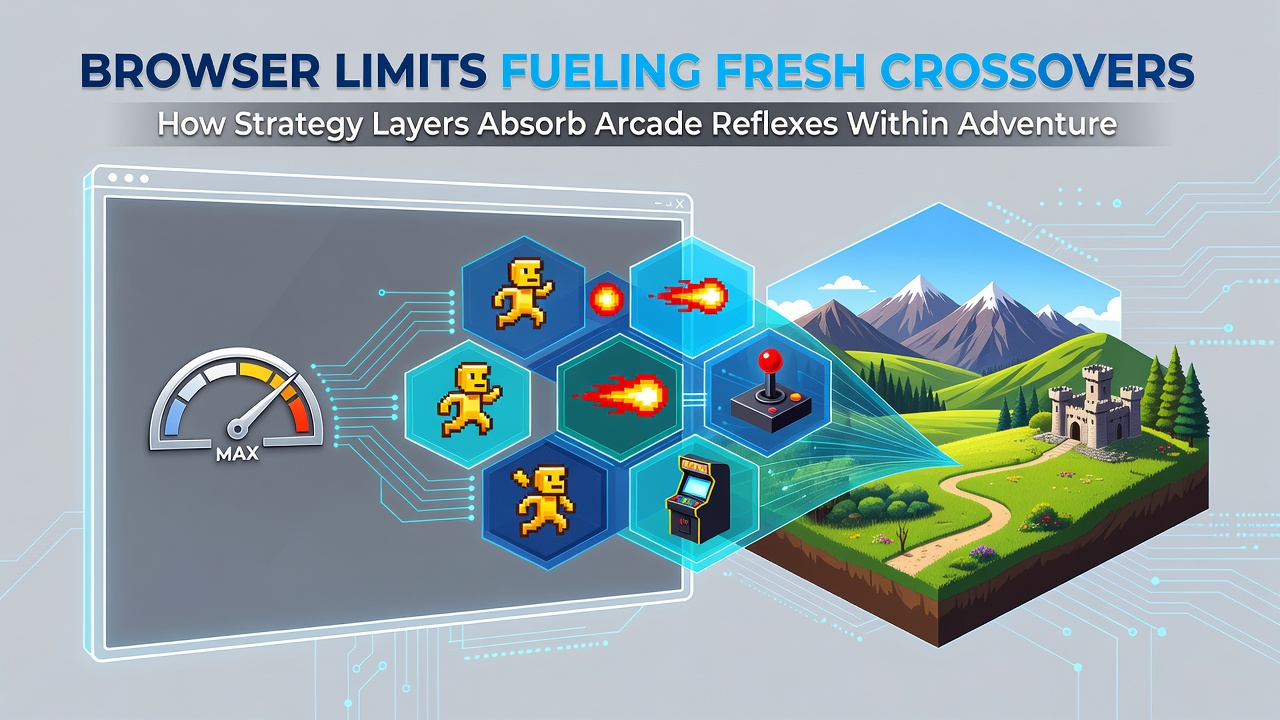
September 2026 brought several platform updates from major browser vendors that refined WebAssembly support, enabling deeper fusion of these mechanics without performance drops. Those who've examined telemetry from popular titles observe that adventure multiplayer environments now frequently incorporate arcade reflex windows inside strategic planning phases, such as timed navigation challenges resolved through collective decision-making rather than individual speed alone.
Case Examples of Emerging Hybrids
Take one development team that shifted an adventure title toward strategy absorption of arcade elements after testing revealed browser throttling on intensive particle effects during group raids. The solution involved replacing sustained shooting sequences with discrete reflex checks embedded in resource allocation turns, preserving tension while fitting within memory ceilings. Research indicates similar adjustments across multiple releases, where puzzle timers from strategy genres moderate the pacing of action segments to accommodate diverse connection qualities.
But here's the thing: these crossovers also appear in titles emphasizing exploration, where players alternate between mapping territories and executing precise maneuvers under strategic oversight from teammates. Reports compiled by the European Games Developer Federation document how such designs improve retention metrics in browser settings compared to standalone genres, because the layered approach distributes cognitive load across planning and reaction.
Future Trajectories for Browser Gaming
Platform evolutions continue to support these blends, with upcoming standards promising better threading for concurrent strategy calculations and arcade input handling. Observers tracking the space point to sustained interest in multiplayer adventure frameworks that leverage browser limits as creative constraints rather than obstacles, fostering titles where strategy layers naturally incorporate reflex demands without breaking immersion or accessibility.
Conclusion
The pattern holds across recent data sets that browser constraints drive measurable genre absorption, resulting in strategy-infused adventure multiplayer experiences that retain arcade precision through adaptive layering. As updates roll out and developer practices evolve, these integrations stand to define accessible online play well into subsequent years.